Tulsi Vivah 2026: Vidhi, Samagri, the Sugarcane Mandap & the Traditions of Bihar, Maharashtra, Gujarat and Andhra
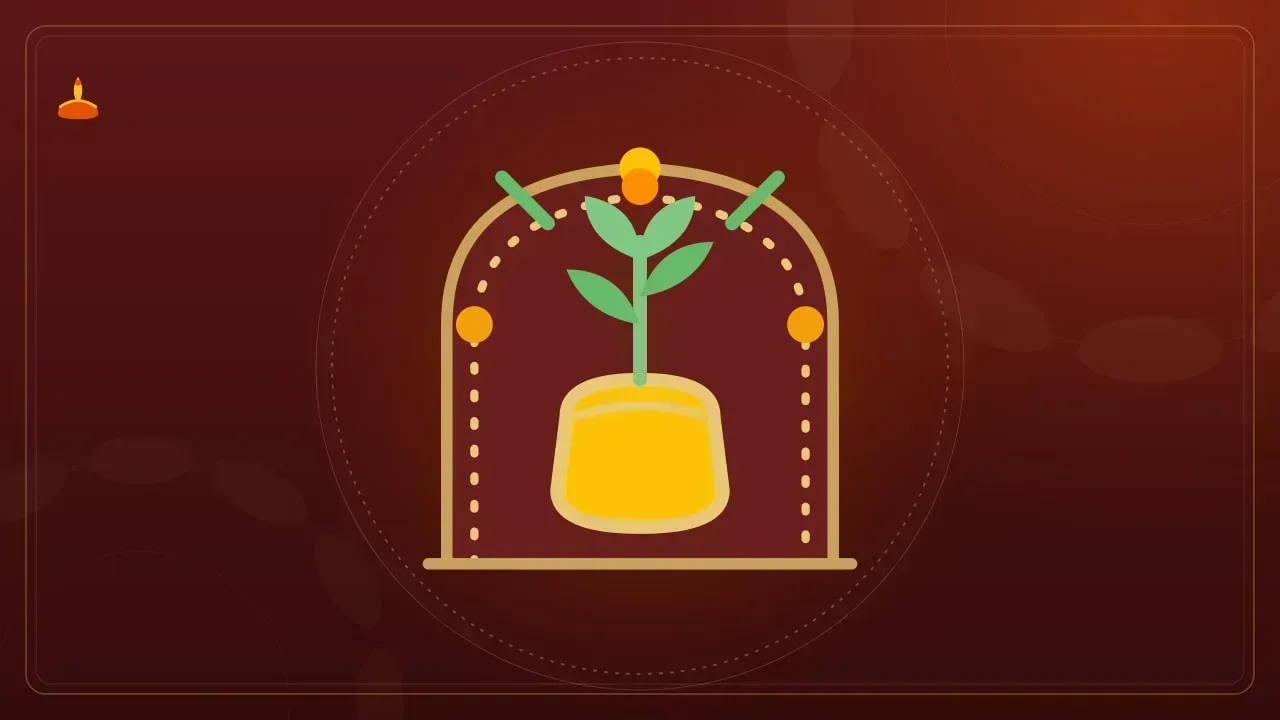
Tulsi Vivah is the festival on which the tulsi plant in the courtyard is dressed as a bride and married to Shaligram (Vishnu). It falls in Kartik, between Prabodhini Ekadashi and Kartik Purnima.
It is kept across India, but four places keep it in genuinely different ways — Bihar-Mithila's Saunja Chapan Bhog, Maharashtra's Mangal Ashtaka, Gujarat's Tulsi-no-Barat and Andhra-Telangana's Ksheerabdhi Dwadashi. This guide sets out all four separately.
Tulsi Vivah 2026: the date window and the legend
Tulsi Vivah takes place in the month of Kartik — between Prabodhini (Devutthani) Ekadashi and Kartik Purnima. Most households hold it on the ekadashi or the purnima, and the exact day varies by region.
The legend: Vrinda was the wife of the demon Jalandhar and a devoted worshipper of Vishnu. To kill Jalandhar, Vishnu took the form of her husband. Discovering the deception, Vrinda cursed Vishnu to become stone (shila) and gave up her own life. Vishnu then granted her the boon that she would be worshipped as tulsi in every home and that he would marry her once a year. That is the origin of the marriage to Shaligram.
This is why tulsi is also called Vrinda, and the Shaligram-tulsi pair is regarded as Vishnu and Lakshmi themselves.
- Tulsi Vivah = Kartik, between Prabodhini Ekadashi and Kartik Purnima
- Groom = Shaligram (or an image of Vishnu/Krishna), bride = tulsi (Vrinda)
- Legend: Vrinda's curse and Vishnu's boon
Open the complete checklist
The vidhi: the sugarcane mandap and the dressing of tulsi
On the day, the tulsi platform is decorated like a wedding mandap. Sugarcane stalks are planted at the four corners and tied together with mango and banana leaves and flowers. Guava, amla, ber and seasonal fruit are hung from the branches.
The tulsi plant is dressed as a bride with red and green cloth, bangles, bindi, kumkum, turmeric and flowers. A Shaligram or an image of Vishnu-Krishna is placed alongside — sometimes wooden, sometimes metal, and in some homes a silver tulsi stand.
The puja uses lamps, camphor, incense, betel leaf and areca nut, coconut, batasha, sweets and seasonal fruit. In many homes a purohit conducts the wedding rites; in others the women of the house perform the vidhi themselves.
- Sugarcane stalks — the four pillars of the mandap (the most recognisable marker)
- Mango and banana leaves, flower garlands, amla, ber, guava and seasonal fruit
- Tulsi's bridal dress: red and green cloth, bangles, bindi, kumkum, turmeric
- A Shaligram / Vishnu-Krishna image, or a silver tulsi stand
- Puja: lamps, camphor, incense, betel and areca nut, coconut, batasha, sweets, fruit
- Prasad and bhog: kheer, puri, sattu, sesame laddoos, jaggery, chana
Bihar and Mithila: Saunja Chapan Bhog
Bihar — especially the Mithila region — has the most distinctive form of Tulsi Vivah. On the morning after the wedding comes the "Saunja Chapan Bhog": fifty-six (chhappan) kinds of items arranged in small earthen pots and offered at the tulsi platform.
Saunja is also associated with a bamboo grove, where the bhog is laid out. The offerings include madua roti, chura, lai, khil, ber, amla, thekua and other traditional sweets along with fifty-six kinds of grain — the list differs from household to household.
The wedding songs and folk tales of Tulsi Vivah sung in Mithila on this occasion have been passed down for generations.
- Saunja Chapan Bhog — the day after Tulsi Vivah, fifty-six kinds of offering
- Arranged in small earthen pots as an auspicious bhog
- Madua roti, chura, lai, khil, thekua, ber, amla
- Folk wedding songs and traditional storytelling
Maharashtra: Tulsi-cha Lagna and the Mangal Ashtaka
In Maharashtra, Tulsi Vivah is called "Tulsi-cha Lagna" and is held mainly on Kartik Purnima. Women decorate the tulsi vrindavan and marry it to Vishnu or Shaligram, and the "Mangal Ashtaka" is recited on the day.
The Mangal Ashtaka is a Marathi hymn read for the wellbeing of married life and the long life of one's husband — which is why the ritual is performed mainly by married women. A lamp is lit at the tulsi and women exchange haldi-kunku.
In Maharashtrian homes around Pune and Mumbai, the day includes a special tulsi puja and a festive meal.
- Tulsi-cha Lagna = Tulsi Vivah in Maharashtra, mainly on Kartik Purnima
- Recitation of the Mangal Ashtaka — for the husband's long life and prosperity
- Performed mainly by married women, with an exchange of haldi-kunku
- Decoration of the tulsi vrindavan and a special puja at home
Gujarat: Tulsi-no-Barat
In Gujarat the form is more celebratory still — here a wedding procession is taken out. In parts of Vadodara, Ahmedabad and Saurashtra, a "barat" is arranged for tulsi, with children, drums, a band and decorated chariots.
Known as "Tulsi-no-Lagna" or "Tulsi Vivah", it is held in many homes on both Kartik Purnima and Devutthani Ekadashi. Betel leaf and areca nut, coconut, sweets, fruit and sugarcane are central to the offerings.
Because tulsi is regarded in Gujarat as a form of Lakshmi, the day also carries the feeling of a Lakshmi puja.
- Tulsi-no-Barat — a Tulsi Vivah with a decorated wedding procession
- Especially popular in Vadodara, Ahmedabad and Saurashtra
- Betel and areca nut, coconut, sweets, fruit and sugarcane as the main offerings
- Tulsi worshipped with the feeling of a Lakshmi puja
Andhra Pradesh and Telangana: Ksheerabdhi Dwadashi
In the Telugu region, Tulsi Vivah is held mainly on Kartik Shukla Dwadashi and is called "Ksheerabdhi Dwadashi" or "Utthana Dwadashi". A "Tulasi Harivillu" (mandap) is built in the courtyard — a multi-pillared structure decorated with turmeric, kumkum and flowers.
Tulsi is married to Krishna, and the Kartik worship continues from the dwadashi to the purnima. Ksheerabdhi means the ocean of milk — the Lord wakes from his sleep on this day, so it is the southern form of Devutthani.
Prasad includes payasam (kheer), puri, vada, pulihora and seasonal fruit. Rice-flour figures and "muggulu" (patterns of lamps) are also part of the decoration.
- Ksheerabdhi / Utthana Dwadashi — Kartik Shukla Dwadashi
- Tulasi Harivillu — a multi-pillared mandap decorated with turmeric and kumkum
- Tulsi married to Krishna, with worship from the dwadashi to the purnima
- Prasad: payasam, puri, vada, pulihora, seasonal fruit
North India, and how to hold Tulsi Vivah at home
In Uttar Pradesh, Delhi, Haryana and Punjab, Tulsi Vivah usually falls on Devutthani Ekadashi or Kartik Purnima. A sugarcane mandap is built in the courtyard, the tulsi is dressed, and the wedding rites are performed in the evening with lamps lit.
If no purohit is available, the women of the house can perform the vidhi themselves: bathe the tulsi, dress it in new cloth, offer bangles and bindi, install the Shaligram as the groom, exchange garlands at the sugarcane mandap, and offer betel and areca nut, coconut, batasha, sweets, and kheer and puri before the aarti.
The heart of the day is lighting a lamp at the tulsi and eating the prasad together as a family. Many households also prepare a chhappan bhog or a special prasad the next day.
- Bathe the tulsi; dress it with new cloth, bangles, bindi and sindoor
- Install a Shaligram or Vishnu-Krishna image as the groom
- Exchange garlands at the sugarcane mandap
- Offer betel and areca nut, coconut, batasha, sweets, fruit, kheer and puri
- Aarti, distribution of prasad, and a family meal
Tulsi Vivah samagri
The full samagri — sugarcane stalks, tulsi decorations, Shaligram, amla-ber-guava, betel and areca nut, coconut, batasha and the bhog items — is listed with quantities and estimated prices in our Tulsi Vivah samagri list.
For the other Kartik festivals, see the Devutthani Ekadashi samagri list and the Pradosh Vrat samagri list. Check auspicious timings with the Muhurat Finder and estimate costs with the budget calculator.
Frequently Asked Questions
When is Tulsi Vivah 2026?
Tulsi Vivah falls in Kartik, between Prabodhini (Devutthani) Ekadashi and Kartik Purnima. Most households hold it on the ekadashi or the purnima, and the day varies by region.
Who is tulsi married to?
Tulsi (Vrinda) is married to Shaligram or an image of Vishnu-Krishna. The Shaligram-tulsi pair is regarded as Vishnu and Lakshmi themselves.
Why is sugarcane used in Tulsi Vivah?
Sugarcane stalks form the four pillars of the mandap. Sugarcane is the crop of the Kartik-Agrahayana season and is regarded as a symbol of auspiciousness and sweetness, which is why it is the most recognisable marker of Tulsi Vivah.
What is Saunja Chapan Bhog?
In Bihar and Mithila, fifty-six (chhappan) kinds of items are arranged in small earthen pots and offered to tulsi on the day after Tulsi Vivah. It is called Saunja Chapan Bhog, and the list of offerings differs from household to household.
What is the Mangal Ashtaka?
The Mangal Ashtaka is a Marathi hymn recited on Tulsi Vivah in Maharashtra for the wellbeing of married life and the long life of one's husband. That is why the ritual there is performed mainly by married women.
Are Ksheerabdhi Dwadashi and Tulsi Vivah the same?
In the Telugu region, Tulsi Vivah is observed on Kartik Shukla Dwadashi as Ksheerabdhi Dwadashi or Utthana Dwadashi. It is the southern form of Devutthani — the Lord wakes from his sleep and the tulsi is married.
Can Tulsi Vivah be done at home without a purohit?
Yes. The women of the house can perform it — bathe and dress the tulsi, install the Shaligram as the groom, exchange garlands, and offer betel and areca nut, coconut, batasha, sweets, and kheer and puri.
Related Articles

Ganga Dussehra 2026: The Holy Dip, the Das-Daan Samagri & the Ghats of Varanasi, Haridwar and Prayagraj
The Jyeshtha Shukla Dashami date rule, the legend of Ganga's descent, the vidhi for the holy dip and deep daan, the full das-daan list, and the ghats of Varanasi, Haridwar, Prayagraj and Patna.
Diwali 2026 Complete Guide: 6–10 November, Lakshmi Puja Muhurat, Rangoli & City-Wise Celebrations
All five days from Dhanteras to Bhai Dooj, the Lakshmi Puja muhurat, rangoli and diya decoration, and celebrations in Delhi, Mumbai, Kolkata and Bengaluru — a city-wise Diwali 2026 guide.