Satyanarayan Katha: Vidhi, Samagri and Significance — Complete Guide
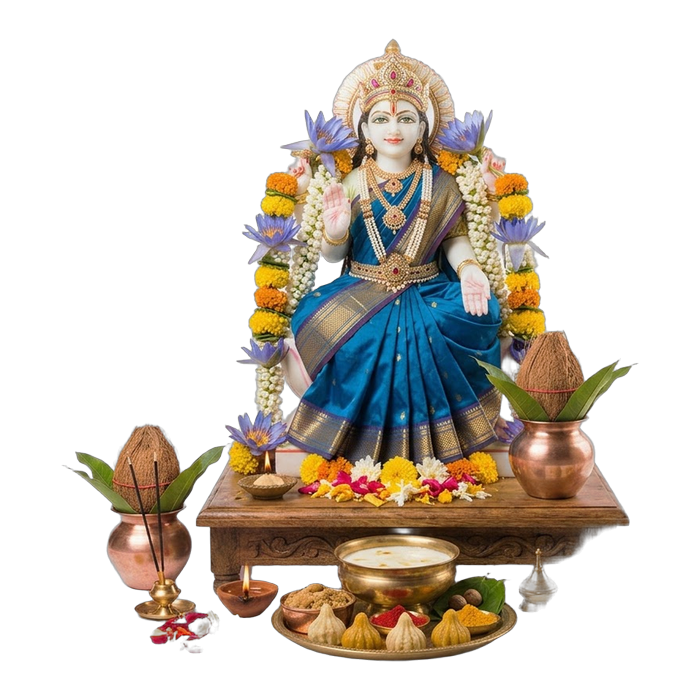
The Satyanarayan katha is the worship of Lord Vishnu's form of Truth (Satya). It is traditionally performed on Purnima — to give thanks after a wish is fulfilled (a new home, a job, a child, a marriage, a new business) or to pray for a heartfelt desire.
The belief is that listening to the katha with devotion and distributing prasad pleases Lord Narayana. Here is the vidhi, the samagri and the tradition behind it.
When to do the katha
Purnima is considered the most auspicious day for the katha. It can also be done on Ekadashi, Sankranti, or after any auspicious occasion. Many families do it every Purnima — the "monthly Satyanarayan". Check the Muhurat Finder for the shubh timing.
Open the complete checklist
Samagri for the katha
The special items: a photo or idol of Lord Vishnu, a pitambar (yellow cloth), mango leaves for the vedi, kalash, coconut, a banana stalk, Ganga jal, tulsi, panchamrit ingredients (milk, curd, ghee, honey, sugar), fruits — especially sapota (chikoo), banana, pomegranate and amla — and the katha book with an aarti thali.
For the prasad you need: wheat flour, sugar or jaggery, ghee, milk and dry fruits — the katha is considered incomplete without distributing the prasad (sooji halwa or a wheat offering). The full list with quantities and estimated prices is in our Satyanarayan katha puja samagri list.
The five chapters of the katha
The Satyanarayan katha has five chapters, each a story about devotion and truth:
- Chapter 1 — the teaching of the Lord's true form to a Brahmin
- Chapter 2 — the story of a poor farmer whose wish is fulfilled
- Chapter 3 — the devotion and test of the merchant Sadanand
- Chapter 4 — the story of King Tungdhwaj's neglect and its consequences
- Chapter 5 — the story of the devout merchant Liladhar
The vidhi — in short
- After a morning bath, set up Lord Satyanarayan on a vedi of mango leaves in the shubh muhurat
- Worship Ganesha and the navagraha, and set up the kalash
- Bathe the deity with panchamrit, dress him in the pitambar, and offer flowers and tulsi
- Listen to or read all five chapters with devotion — keep offering fruits and flowers between them
- Serve the bhog (halwa-puri, fruits, panchamrit) and perform the aarti
- Most important — distribute the prasad to everyone; the katha is considered accomplished only through prasad distribution
The significance of the katha
The message of the katha is simple — follow the truth, keep faith in God, and share what you have through charity. The characters who act with pride or neglect suffer, while those who worship with devotion have their wishes fulfilled. That is why distributing prasad and giving dan to the needy after the katha is an essential part of this puja.
Frequently Asked Questions
On which day should the Satyanarayan katha be done?
Purnima is the most auspicious day. It can also be performed on Ekadashi, Sankranti, or after any auspicious occasion.
What is the Satyanarayan prasad?
Sooji or wheat halwa, puri, chana dal and panchamrit — distributing the prasad is considered essential for the katha's completion.
Why is panchamrit needed in the katha?
The deity is bathed with panchamrit (milk, curd, ghee, honey, sugar) — it symbolises nectar and is also distributed as prasad.
Related Articles

Chhath Puja 2026: The Four-Day Vidhi, Thekua-Kasar Samagri & The Ghats of Patna, Ranchi and Delhi
All four days from Nahay Khay to Usha Arghya, the full thekua-kasar-daura samagri, the rules of the nirjala fast, and where Chhath is celebrated in Patna, Ranchi, Delhi and Mumbai.
Jagannath Rath Yatra 2026: The Puri, Ahmedabad and Kolkata Traditions, Vidhi & Samagri
The Ashadh Shukla Dwitiya date rule, the full Pahandi to Bahuda Yatra sequence, the names of the three chariots, samagri for the home puja, and how Puri, Ahmedabad and Kolkata each keep the tradition.