Radha Ashtami 2026: Vidhi, Shringar Samagri, Barsana's Ladli Ji Temple and the Braj Tradition
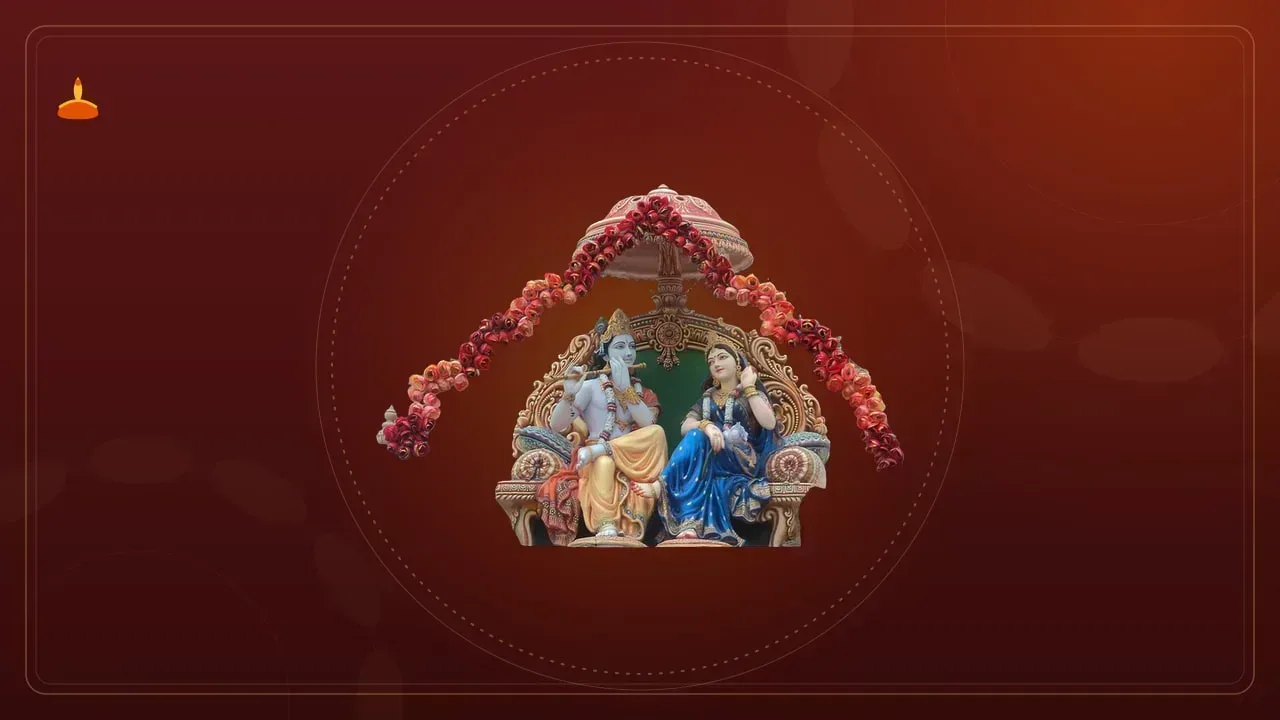
Radha Ashtami is the birth anniversary of Radha Rani, falling on the ashtami of the waxing moon in Bhadrapada — roughly fifteen days after Janmashtami.
This is Braj's festival. In Barsana, Nandgaon, Vrindavan and Mathura the day brings an abhishek of Radha Rani, a full shringar and a chhappan bhog. This guide covers the vidhi, the complete shringar samagri, the Braj tradition and the vrat rules.
Radha Ashtami 2026: the date, and how it differs from Janmashtami
Radha Ashtami falls on the ashtami of the waxing moon in Bhadrapada, so the Gregorian date shifts each year. Janmashtami falls on the ashtami of the waning moon in Bhadrapada — Krishna is born in the dark fortnight and Radha in the bright, roughly fifteen days apart.
Radha Rani's birthplace is held to be Rawal village near Barsana in Braj. The Ladli Ji temple at Barsana is her foremost shrine.
In many North Indian homes a fast is kept on Radha Ashtami, and the day is also a major festival across South India and at ISKCON centres.
- Radha Ashtami = Bhadrapada Shukla Ashtami
- Janmashtami = Bhadrapada Krishna Ashtami — about 15 days apart
- Birthplace: Rawal village near Barsana, in Braj
- Foremost shrine: the Ladli Ji temple at Barsana
Open the complete checklist
Radha Rani and her place in the Braj tradition
The literary history is worth knowing. Radha does not appear prominently in the Krishna narrative of the Bhagavata Purana. Her central role develops later — in Jayadeva's Gita Govinda (12th century), the Brahma Vaivarta Purana, and the writings of the Gaudiya Vaishnava teachers.
That is why the Radha-Krishna yugal (paired) form is the centre of worship today in Braj, Bengal, Manipur and the ISKCON tradition — Radha is regarded as Krishna's ahladini shakti, the energy that gives him joy.
In practice this means that wherever the paired Radha-Krishna form is installed, Radha Ashtami is celebrated on a scale equal to Janmashtami.
- Radha is not prominent in the Bhagavata Purana
- Main sources: the Gita Govinda, the Brahma Vaivarta Purana, Gaudiya Vaishnava literature
- Radha = Krishna's ahladini shakti, worshipped as the paired form
The vidhi: abhishek, shringar and bhog
After bathing in the morning, the paired Radha-Krishna form is worshipped. First comes an abhishek with panchamrit (milk, curd, ghee, honey and sugar) or at least with Ganga jal, followed by a bath with plain water.
After the abhishek comes the shringar — a new lehenga-choli or chunari, ornaments, bangles, anklets, kumkum, sindoor, mahavar, attar and a flower garland. Yellow is considered dearest to Radha Rani, so yellow cloth and yellow flowers are given priority.
Then incense, lamps, naivedya and aarti. The bhog includes laddoo, mishri, makkhan (white butter), dhaniya panjiri, kheer and seasonal fruit. Many homes also follow the chhappan bhog tradition.
The evening brings bhajan and kirtan, and temples take out a palanquin or procession for Radha Rani.
- Abhishek with panchamrit or Ganga jal, then a water bath
- Shringar: new lehenga-choli or chunari, ornaments, bangles, anklets
- Kumkum, sindoor, mahavar, attar, flower garland — yellow given priority
- Incense, lamps, naivedya, aarti
- Bhog: laddoo, mishri, makkhan, dhaniya panjiri, kheer, seasonal fruit, chhappan bhog
- Bhajan and kirtan in the evening, with a palanquin or procession
The Radha Ashtami vrat: rules and parana
The Radha Ashtami fast is kept much like the Janmashtami one. Many devotees fast through the ashtami tithi and break it the next day; in other homes the fast is kept until midday and broken after the midday bhog.
In the ISKCON and Gaudiya tradition the Radhashtami fast is kept until noon, after which grain is taken.
The fast excludes grain and, in some families, onion and garlic; fruit, milk and sweets carry the day. The spirit of the vrat is restraint and remembrance. Anyone with a health condition should decide the form of the fast with their doctor's advice.
- Fast on the ashtami tithi and break it the next day, or fast until midday
- In the ISKCON/Gaudiya tradition, fast until noon and then take grain
- Fruit, milk and sweets; onion and garlic avoided in some homes
- With any health condition, decide the form of the fast with a doctor
Barsana: the Ladli Ji temple and the mukharvind tradition
The Ladli Ji temple at Barsana is Radha Rani's foremost shrine, and one of its customs is famous across Braj — the temple does not house a full image of Radha Rani, but a mukharvind, a face alone.
Radha Ashtami is Barsana's largest festival. On the day Radha Rani is given an abhishek, the temple is decorated with flowers, and devotees come from far away for the darshan of Ladli Ji. Rawal village, near Barsana, is held to be Radha Rani's birthplace.
Nandgaon, regarded as Krishna's village, also holds a special celebration — in the tradition Radha Rani is Nandgaon's daughter-in-law, and the Barsana-Nandgaon relationship is very visible at this festival.
- Barsana: the Ladli Ji temple — Radha Rani's foremost shrine
- The mukharvind tradition — a face alone, not a full image
- Radha Ashtami brings an abhishek, floral decoration and a huge fair
- Rawal village (near Barsana) — held to be the birthplace
- The Nandgaon celebration — the Barsana-Nandgaon bond
Vrindavan and Mathura: shringar darshan at the temples
In Vrindavan, Radha Ashtami brings special shringar darshan at the temples. At temples such as Radha Raman, Radha Damodar, Radha Vallabh and Radha Madan Mohan, the decoration of the paired form and the chhappan bhog are especially elaborate on this day.
The Radha Vallabh temple is known for a tradition that gives Radha precedence over Krishna — its form of joint worship is distinct.
Mathura's temples also celebrate, and devotees walking the Braj Mandal circuit often choose to be in Barsana or Vrindavan on Radha Ashtami.
- Vrindavan: Radha Raman, Radha Damodar, Radha Vallabh, Radha Madan Mohan
- Special shringar darshan and chhappan bhog
- The Radha Vallabh temple — a tradition giving Radha precedence
- Mathura and the Braj Mandal circuit
Bengal, Manipur and the ISKCON centres
In Bengal, Radha Ashtami is a major festival of the Gaudiya Vaishnava tradition. At Nabadwip-Mayapur, the birthplace of Chaitanya Mahaprabhu, the day is celebrated elaborately, and the Radha-Krishna temples of Bankura, Bishnupur and Kalna also hold traditional pujas.
In Manipur, Gaudiya Vaishnavism has been deeply rooted since the 18th century, and Radha Ashtami is widely observed there too.
At ISKCON centres — Vrindavan, Mayapur, Mumbai (Juhu), Bengaluru, Hyderabad, Delhi and Chennai — Radhashtami brings a fast until noon, an abhishek during the day, and a special feast and kirtan in the evening.
- Bengal: Nabadwip-Mayapur, and the Radha-Krishna temples of Bankura, Bishnupur and Kalna
- Manipur: widely observed within the Gaudiya Vaishnava tradition
- ISKCON: Vrindavan, Mayapur, Mumbai, Bengaluru, Hyderabad, Delhi, Chennai
- At ISKCON, a fast until noon, an abhishek, and evening bhog and kirtan
Radha Ashtami shringar samagri
The full samagri — a paired Radha-Krishna image, new cloth, ornaments, bangles, kumkum, sindoor, mahavar, attar, a peacock feather, a flute, the panchamrit ingredients and the bhog items — is listed with quantities and estimated prices in our Radha Ashtami samagri list.
For the other Krishna festivals, see the Janmashtami samagri list and the Govardhan Puja and Annakut samagri list. Check the abhishek timing with the Muhurat Finder and estimate costs with the budget calculator.
Frequently Asked Questions
When is Radha Ashtami 2026?
Radha Ashtami falls on the ashtami of the waxing moon in Bhadrapada. It comes roughly fifteen days after Janmashtami, so the Gregorian date shifts each year.
What is the difference between Radha Ashtami and Janmashtami?
Janmashtami falls on Bhadrapada Krishna Ashtami and celebrates Krishna's birth. Radha Ashtami falls on Bhadrapada Shukla Ashtami and celebrates Radha Rani's birth — about fifteen days apart.
What is offered to Radha Rani?
Shringar items — a new lehenga-choli or chunari, ornaments, bangles, kumkum, sindoor, mahavar, attar and a flower garland. The bhog includes laddoo, mishri, makkhan, dhaniya panjiri, kheer and seasonal fruit.
How is the Radha Ashtami fast observed?
Many devotees fast through the ashtami tithi and break it the next day. In the ISKCON and Gaudiya tradition the fast is kept until noon, after which grain is taken.
Why is the Ladli Ji temple at Barsana famous?
The Ladli Ji temple at Barsana is Radha Rani's foremost shrine. It houses not a full image but a mukharvind — a face alone — a custom famous across Braj. Radha Ashtami is its largest festival.
Where was Radha Rani born?
In the Braj tradition, Rawal village near Barsana is held to be Radha Rani's birthplace. The Barsana-Nandgaon relationship is especially visible at this festival.
Is chhappan bhog offered on Radha Ashtami?
Yes, many temples and homes follow the chhappan bhog tradition. The Vrindavan temples hold special shringar darshan and chhappan bhog on Radha Ashtami.
Related Articles
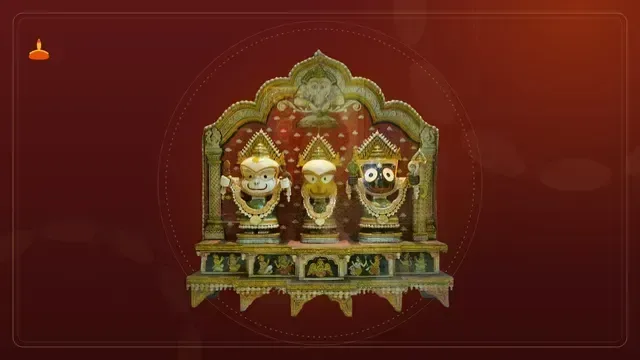
Jagannath Rath Yatra 2026: The Puri, Ahmedabad and Kolkata Traditions, Vidhi & Samagri
The Ashadh Shukla Dwitiya date rule, the full Pahandi to Bahuda Yatra sequence, the names of the three chariots, samagri for the home puja, and how Puri, Ahmedabad and Kolkata each keep the tradition.
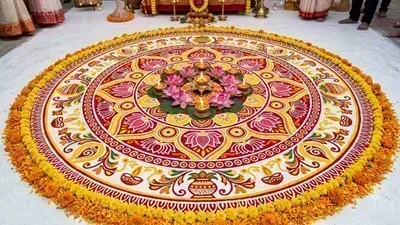
Diwali 2026 Complete Guide: 6–10 November, Lakshmi Puja Muhurat, Rangoli & City-Wise Celebrations
All five days from Dhanteras to Bhai Dooj, the Lakshmi Puja muhurat, rangoli and diya decoration, and celebrations in Delhi, Mumbai, Kolkata and Bengaluru — a city-wise Diwali 2026 guide.