Griha Pravesh Puja: Muhurat, Vastu Shanti & Samagri Guide
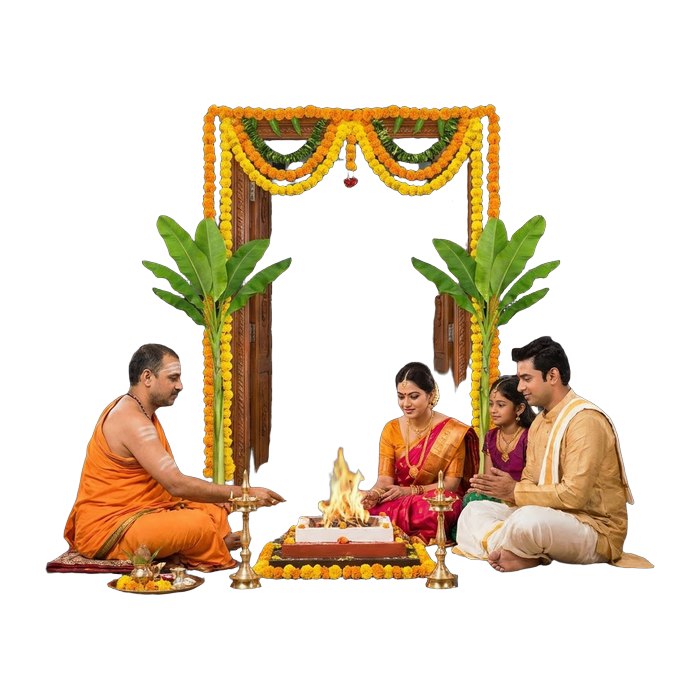
Buying or building a new home is one of life's biggest milestones, and our tradition calls for a griha pravesh puja before moving in. The belief is that the puja fills the home with positive energy and marks an auspicious new beginning.
But preparing for it is not easy — muhurat, priest, samagri, havan and a feast, all at once. This guide is for exactly that.
Types of griha pravesh
Traditionally there are three types:
- Apoorva griha pravesh — first entry into a newly built or newly purchased property
- Sapoorva griha pravesh — re-entry into your own home after returning from abroad or another city
- Randhr griha pravesh — re-entry after repair or renovation of the house
Open the complete checklist
How to choose the shubh muhurat
The months of Magha, Phalguna, Vaishakh and Jyeshtha are considered auspicious. Monday, Wednesday, Thursday and Friday are good days, and the tithis 1, 2, 3, 5, 7, 10, 11, 13 and 15 (Purnima) are favourable. Most importantly, have a qualified priest fix the muhurat based on the lagna from the panchang and your janam kundli. You can also check shubh muhurat and rahukaal in our Muhurat Finder.
Puja samagri — a complete list is essential
Griha pravesh samagri includes: kalash and coconut, mango leaves, Ganga jal, kumkum, haldi, akshat, chandan, ghee, dhoop, camphor, fruits, flowers, sweets, jaggery, curd, mustard oil, havan samagri (samidha, ghee, barley, sesame, rice) and red cloth with mauli.
A few special items to keep ready: a new vessel for boiling milk, a plate of rice (to place at the threshold during entry), and items for the Gauri-Ganesh puja. The full list with quantities and estimated prices is in our griha pravesh puja samagri list. If you also need vastu dosh shanti, see the vastu shanti puja samagri list as well.
Griha pravesh vidhi — step by step
- Clean the house in the morning and decorate the main door with a toran and rangoli
- Enter in the shubh muhurat, stepping in with the right foot first (the owner enters first)
- Place a kalash at the entrance — decorated with coconut, rice and flowers, it symbolises prosperity
- Perform the puja of Gauri-Ganesh and the navagraha
- Boil milk in the kitchen — overflowing milk is considered a sign of abundance
- Perform the havan and sprinkle Ganga jal in every room of the house
- Finally, serve food — invite priests or the elders of the family to eat first
Things to keep in mind
- Finish all repairs before the puja — no pending work or electricity-water issues
- Do not leave the house empty on the day of the pravesh — keep a diya burning for at least three days
- Do not cook in an old hearth — the first meal cooked in the new home is considered auspicious
- If the muhurat is delayed, do a simple entry with auspicious items like jaggery and curd, and perform the full puja later
Estimating the cost
Most griha pravesh spending goes to the feast and gifts rather than the puja itself. Plan the whole event with the budget calculator — samagri, dakshina, feast and decoration, all in one place.
Frequently Asked Questions
Which months are auspicious for griha pravesh?
Magha, Phalguna, Vaishakh and Jyeshtha are considered the most auspicious. For an exact muhurat, consult a qualified priest with the panchang and your kundli.
Why is milk boiled during griha pravesh?
Boiling milk in the new kitchen symbolises abundance and auspiciousness — the milk is then shared among the family members.
Can we enter the house without a puja?
If the muhurat is delayed, you may do a simple entry with auspicious items like jaggery and curd, and perform the full puja later in a shubh muhurat.