Durga Puja 2026: Complete Guide to History, Dates, Rituals and Celebrations
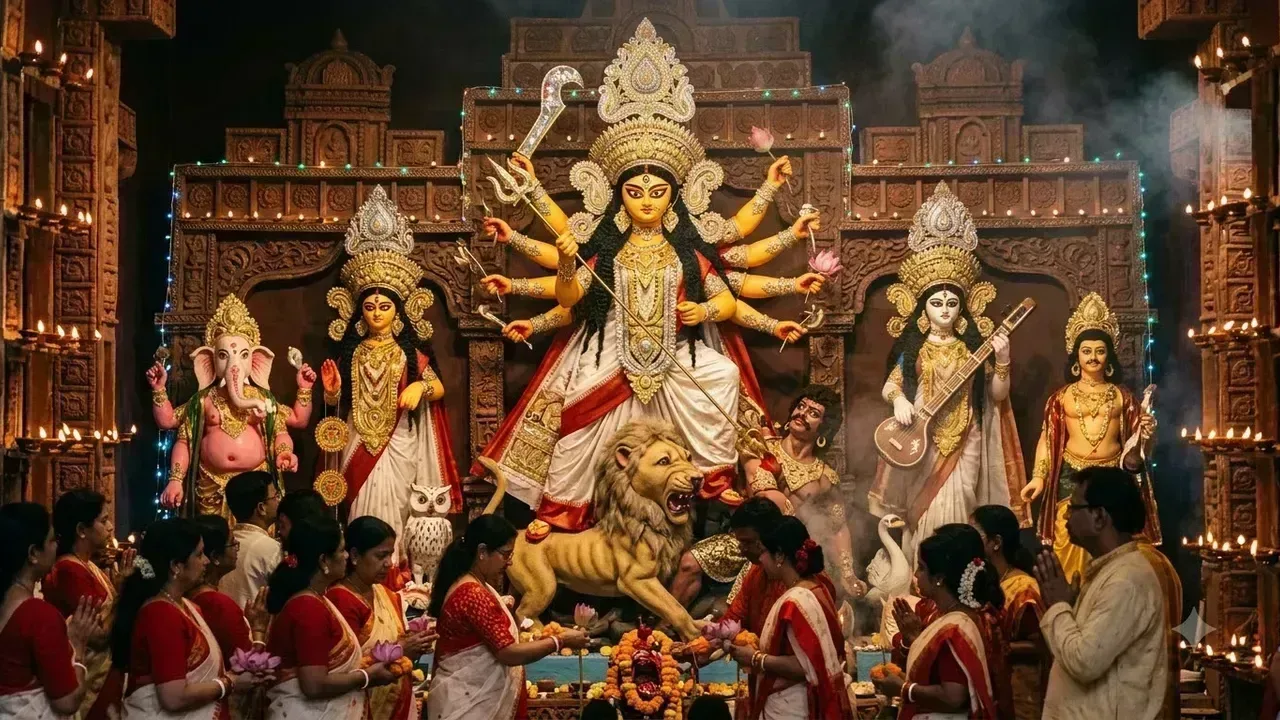
Durga Puja 2026 will be celebrated from 17 to 21 October — beginning with Mahalaya (10 October) and ending with idol immersion on Vijaya Dashami. It is the grandest and most vibrant festival of Hinduism — a magnificent coming together of religion, art, music, dance and community spirit.
In 2021, Durga Puja was inscribed on UNESCO’s list of Intangible Cultural Heritage — the world formally recognised the cultural significance of this great Indian festival. This guide covers the history of Durga Puja, the 2026 dates, the rituals, and its most beloved traditions in detail.
History and Mythological Story of Durga Puja
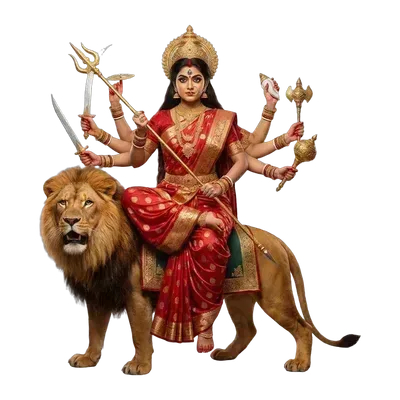
According to Hindu mythology, the demon Mahishasura performed severe penance and received a boon from Lord Brahma that no man could ever kill him. Drunk on that power, he unleashed tyranny across the three worlds. In answer, the combined energies of all the gods gave birth to a divine force — Adi Shakti Maa Durga — into whose ten hands each god placed his own weapon.
After a fierce nine-day battle, Maa Durga slew Mahishasura and ended his reign of adharma. Durga Puja celebrates this victory — the triumph of good over evil and of righteousness over tyranny.
The festival is also linked to the Ramayana: before his battle with Ravana, Lord Rama invoked Goddess Durga out of season (Akal Bodhan). This tradition from the Treta Yuga is why the Sharadiya (autumn) Durga Puja carries such significance.
Open the complete checklist
Durga Puja on the UNESCO Intangible Cultural Heritage List
In December 2021, UNESCO inscribed Durga Puja on its list of the Intangible Cultural Heritage of Humanity. The recognition covers not just the rituals but the entire festival — the idol-making craft of Kumartuli, theme-based pandal art, the beat of the dhaki drummers, dhunuchi dance, the bhog tradition, and the participation of millions of people.
According to UNESCO’s official inscription, the festival is a living example of inclusiveness, art preservation and cultural continuity. You can also read more in Wikipedia’s Durga Puja article.
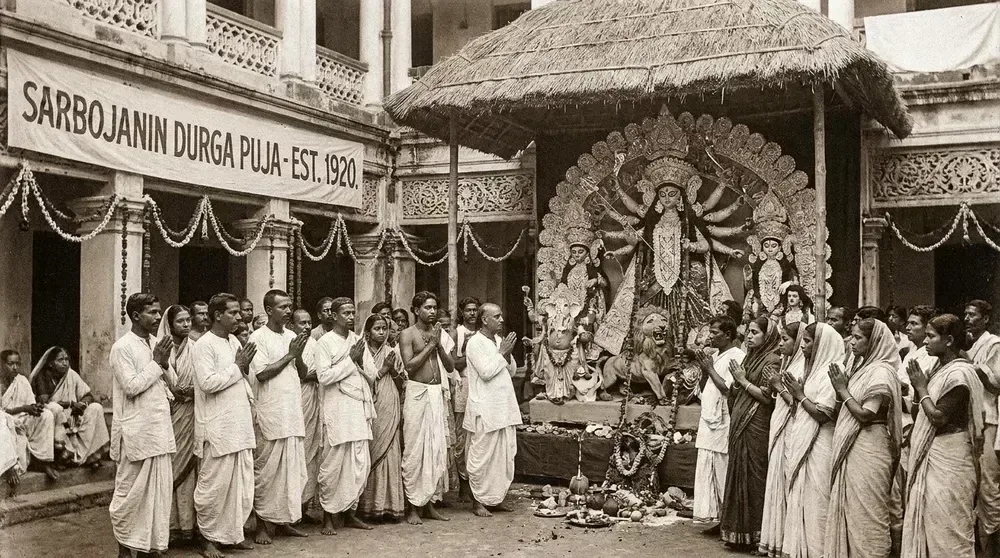
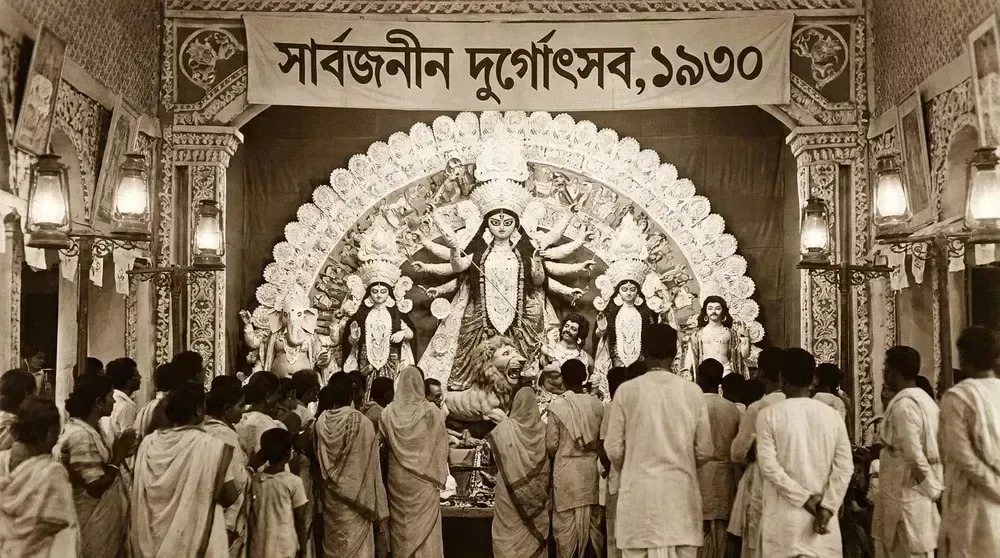
Durga Puja 2026: Dates and Important Days
The main days of Durga Puja 2026 and their significance:
- Mahalaya — 10 October 2026 (end of Pitru Paksha; tarpan for ancestors and the announcement of the Goddess’s arrival)
- Maha Shashti — 17 October 2026 (bodhan and pran pratishtha of the idol; the festival begins)
- Maha Saptami — 18 October 2026 (navapatrika/kalash sthapana, mahasnan)
- Maha Ashtami — 19 October 2026 (the holiest day — pushpanjali, kumari pujan and Sandhi Puja)
- Maha Navami — 20 October 2026 (havan and the concluding recitation of Durga Saptashati)
- Vijaya Dashami — 21 October 2026 (sindoor khela, the Goddess’s farewell and idol immersion)
How Is Durga Puja Celebrated? Rituals and Traditions
Preparations begin months in advance. In Kolkata’s Kumartuli quarter, artisans sculpt the idols of Maa Durga and her family from clay — by tradition, the clay includes soil from the banks of the Ganga and the wood of the shami tree.
On Mahalaya, people perform tarpan for their ancestors by the river at dawn, and it is believed that on this day Maa Durga begins her journey to Earth. On Shashti, the idol is invoked — the Goddess is called beneath a bel tree and her life force (pran) is installed in the idol.
From Saptami to Navami, pujas are held morning and evening. During Sandhi Puja, devotees light 108 lamps and offer them to the Goddess. In the dhunuchi dance, devotees hold dhunuchis (incense burners with glowing charcoal) and dance to the beat of the dhak — the most captivating sight of Durga Puja.
On Ashtami, young girls are worshipped as the Goddess herself (kumari pujan), and a special bhog — kheer, puri, luchi, payesh and vegetables — is offered and distributed as prasad. On Vijaya Dashami, married women play sindoor khela, applying vermilion to each other and to the Goddess as a symbol of marital bliss and prosperity before her farewell.
Finally, the immersion procession sets out — with drumbeats, song and dance, and the cry of "আসচে বছর আবার হোবে" (may it happen again next year), the idols are carried to the river. It is one of the most emotional and magnificent spectacles of the festival.
Durga Puja Samagri List for Celebrating at Home
If you are observing Navratri and Durga Puja at home, the complete samagri list — kalash, ghatasthapana items, red chunari, sindoor, flowers, akshat, coconut, havan samagri and bhog items — with quantities is in our Durga Puja / Navratri samagri list. Check it once and shop with a ready checklist.
Want to know the cost of the whole festival in advance? Use the budget calculator, and check the shubh muhurat for Shashti and Vijaya Dashami in the Muhurat Finder.
Why Is Durga Puja So Special?
Durga Puja is not just a religious festival — it is a magnificent celebration of culture, art, music, dance and community spirit. It is the greatest symbol of feminine power: ten-armed Maa Durga shows that strength and compassion can coexist.
Thousands of pandals rise across Kolkata — each one an art installation, built over months by artists around a theme. Revellers spend entire nights pandal-hopping. Economically too, the festival is one of Bengal’s largest events, sustaining millions of livelihoods.
Most beautiful of all, people of every faith, class and age take part as equals. Durga Puja is a living example of India’s social unity — and a reminder of the victory of good over evil and the importance of feminine power.
Frequently Asked Questions
When is Durga Puja 2026?
The main days of Durga Puja 2026 are 17–21 October 2026 — from Maha Shashti (17 October) to Vijaya Dashami (21 October), which ends with idol immersion. Mahalaya falls on 10 October 2026.
When did UNESCO recognise Durga Puja?
In December 2021, UNESCO inscribed Kolkata’s Durga Puja on its list of the Intangible Cultural Heritage of Humanity.
What is sindoor khela?
On Vijaya Dashami, married women offer sindoor (vermilion) to Maa Durga and then apply it to one another. Called sindoor khela, it celebrates marital bliss and prosperity and marks the Goddess’s farewell.
What is the difference between Durga Puja and Navratri?
Navratri is the nine-day worship of the nine forms of Goddess Durga, celebrated across India from ghatasthapana to Vijaya Dashami. Durga Puja is its Bengali form, in which the idol of Maa Durga is installed and worshipped with grandeur from Shashti to Dashami.
Where can I find the complete Durga Puja samagri list?
The complete list with quantities and estimated prices is on our Durga Puja / Navratri samagri list page, where you can also download the checklist.
Related Articles
Durga Puja 2026 Complete Guide: Pandals, Bhog, Sandhi Puja & City-Wise Celebrations
From the Mahishasura legend to bhoger khichuri, Kumartuli idols, the famous Kolkata pandals and celebrations in Delhi, Mumbai and Bengaluru — a city-wise Durga Puja 2026 guide.
Navratri 2026: 9-Day Puja Samagri, Ghatasthapana & Preparation Guide
From ghatasthapana to Vijayadashami — the complete Navratri 2026 samagri list, the nine goddesses and fasting rules in one place.